← Back to English Insights
Medical device regulatory insight · 2026-01-15
OpenAI Launches ChatGPT Health: Healthcare Will Not Be Replaced by AI, but It Will Be Reorganized by AI
OpenAI Enters AI Healthcare: ChatGPT Health Goes Live
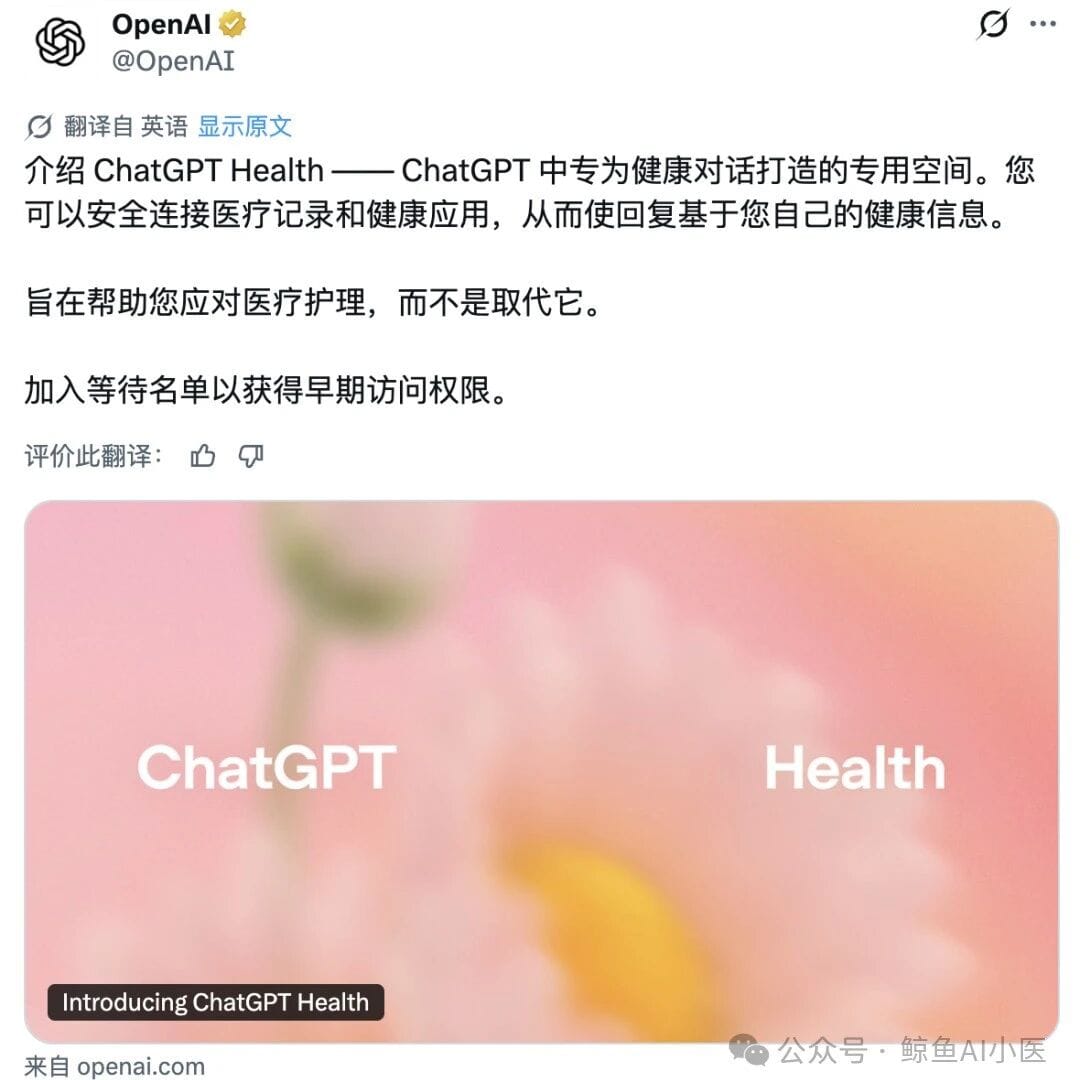
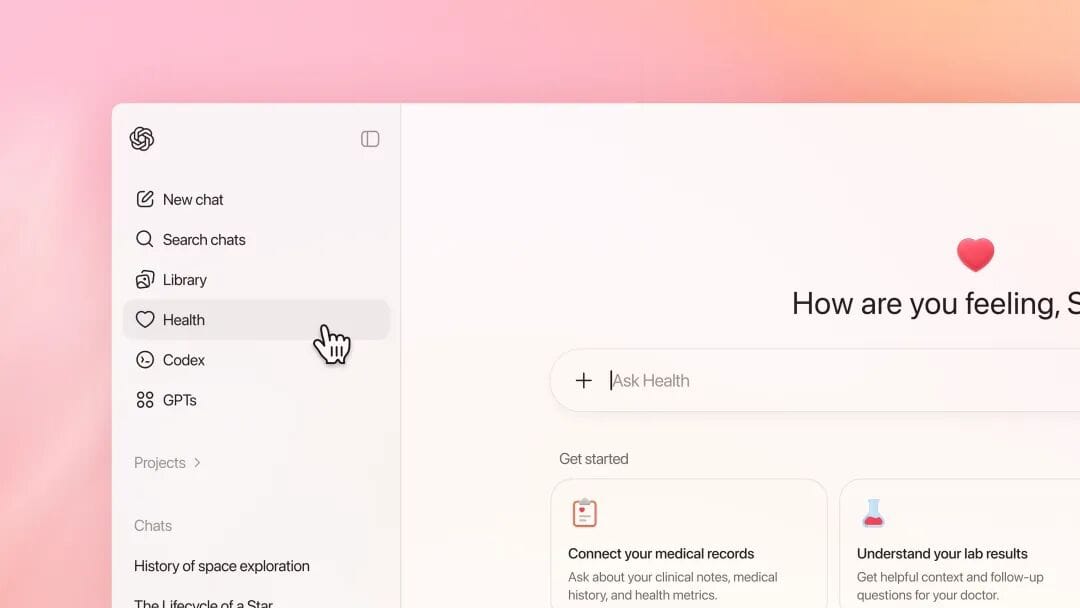
This time, OpenAI’s launch of ChatGPT Health brings together personal health data scattered across hospital portals, health apps, and wearable devices into a single conversational entry point, so the conversation is no longer based only on “the symptoms you describe,” but can instead be grounded in “your real-world data.”1. This is not a “health version chatbot,” but a conversational interface connected to health data
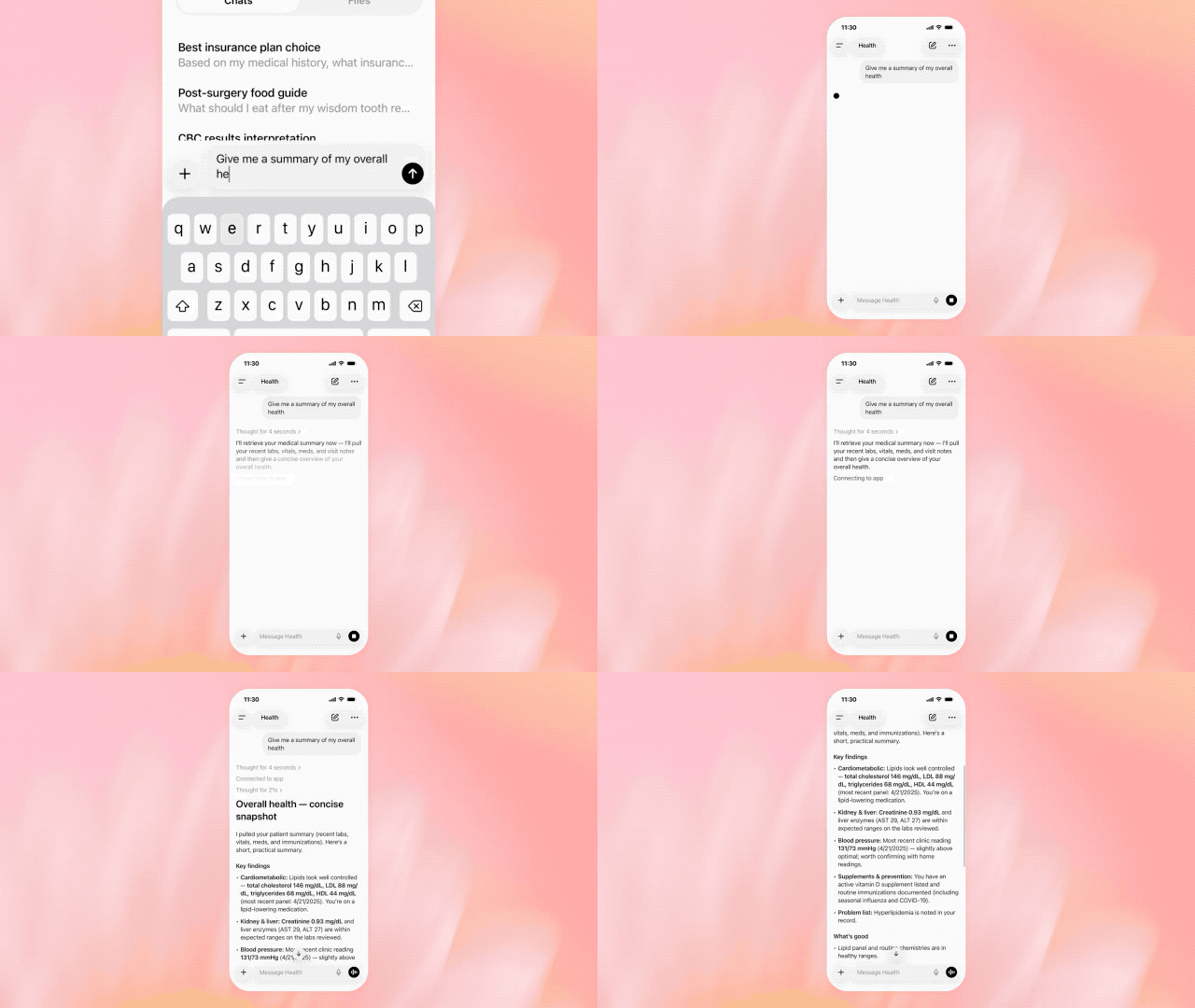
OpenAI has made Health a standalone tab within ChatGPT (the Health tab), and its core logic is not complicated: it uses “conversation” as a new interface for health data. Once users authorize connections to medical records and health applications, AI responses are no longer generic educational explanations, but context-aware “personalized reasoning.”- Previously: you first had to locate the data yourself (physical examination reports, blood glucose trends, medication records) and then piece it together before asking questions.
- Now: you can directly ask, “How has my cholesterol trended recently?” or “What should I ask at my follow-up appointment tomorrow?”, and the system will retrieve and summarize the relevant data.
- The significance: it shifts the “cost of information retrieval” from the user side to the system side, making health management closer to an ongoing daily workflow.
2. Why now: demand, the regulatory window, and the commercialization path have emerged at the same time
Public reporting indicates that health consultation has already become one of the high-frequency use cases for ChatGPT. The launch of Health separates this “high-frequency, high-risk” use case from the general product and builds stronger boundaries, privacy protections, and safety mechanisms around it—this is both a product upgrade and a productized form of risk governance.- On the demand side: people are increasingly willing to ask AI first before seeking medical care, with AI serving as the “first-stop interpreter” and “pre-visit organizer.”
- On the supply side: physician time is scarce. When patients arrive with a clearer list of questions, it can itself improve outpatient communication efficiency and reduce the risk of omissions.
- On the commercial side: Health connects health behaviors with the consumption chain (training programs, nutrition and grocery purchasing, insurance comparison, etc.), creating a more stable monetization and partnership pathway for a “super assistant.”
3. Product breakdown: three layers of capability plus one bottom line
From a functional perspective, ChatGPT Health’s capabilities can be roughly divided into three layers: data integration, understanding and summarization, and actionable guidance; the bottom line is privacy segregation and risk signaling.- Layer 1: data integration. Official information indicates that medical records can be connected through b.well; health and nutrition applications such as Apple Health and MyFitnessPal can also be connected through user authorization.
- Layer 2: understanding and summarization. It converts laboratory reports, discharge summaries, and care instructions into readable summaries, explaining abnormal indicators and possible next-step questions.
- Layer 3: actionable guidance. It provides structured checklists and plans covering diet, exercise, follow-up visit preparation, insurance option comparison, and more.
- Bottom line: a dedicated health environment and stricter privacy controls. OpenAI emphasizes that health conversations and connected data are stored separately and states that they will not be used to train models.
4. Impact on the healthcare environment: breaking “seeking care” into workflows that can be optimized by AI
In healthcare systems, much of the friction does not come from diagnosis itself, but from information asymmetry and fragmented workflows. The potential impact of ChatGPT Health may first appear in the stages before and after care delivery, rather than in directly replacing physicians.- For patients: it reduces the burden of understanding information, turning “making sense of” physical examination and laboratory results into a repeatable capability; more importantly, it helps generate actionable follow-up question lists and self-management plans.
- For physicians: when patients enter the consultation room with structured information, limited face-to-face time can shift from “explaining reports” to “decision-making and communication”; at the same time, it may reduce the risk of missing past medical history.
- For hospitals and payers: if patients can identify risks earlier and adhere better to treatment plans, this could theoretically help reduce unnecessary emergency visits and readmissions; insurance comparison functions may also promote payment transparency.
- For the health industry: wearable devices, nutrition and exercise platforms, medication adherence management, and related sectors may all reorganize their product models around the “conversational entry point.”
5. The biggest challenges: accuracy, accountability chain, and privacy trust
The more Health appears to “understand you,” the more concentrated the risks become. For it to become health infrastructure that can be used over the long term, it must overcome at least three thresholds.- Accuracy: in a medical context, “appearing reasonable” is far from sufficient. AI needs to explicitly indicate information gaps when uncertainty exists and set more conservative thresholds for “you should go to the hospital/emergency department.”
- Accountability chain: who is responsible for the guidance, how misleading outputs can be traced, and how it interfaces with physician decision-making—these factors determine whether it functions more like an “information assistant” or a “clinical tool.”
- Privacy trust: health data are more sensitive than chat logs. Even if the official position emphasizes segregation, encryption, and user revocation at any time, users will still worry about data breaches and secondary use.
6. How to use it as a smarter medical-care assistant
- Use it as an “organization and explanation tool”: upload laboratory reports or discharge summaries, ask it to summarize them in plain language, and list 3-5 key questions you need to confirm with your physician.
- Use it as a “trend analysis tool”: ask it to perform time-series comparisons based on your authorized data (for example, blood glucose, blood lipids, body weight, and sleep) and explain in one sentence “what the change means.”
- Do not use it as a “source of diagnosis and prescriptions”: for any symptoms involving acute chest pain, difficulty breathing, severe allergic reactions, altered consciousness, and similar presentations, prioritize in-person medical care or emergency services rather than “waiting for an answer” from AI.
- Before each authorization, make a “data minimization” choice: connect only the apps and indicators you will actually use, and revoke access when finished; avoid opening all data sources at once.
Conclusion: Health’s real competitor is not physicians, but fragmented health information systems
ChatGPT Health is more like a competition at the “entry-point” level: using conversation to connect health data, interpretation, and action into a closed loop. It may not change diagnosis itself in the short term, but it is very likely to change how patients prepare for medical visits, how they understand their own indicators, and how health services are consumed. The dividing line over the next few years will be this: who can make accuracy and the accountability chain sufficiently clear, and make privacy and controllability sufficiently trustworthy.References (public reporting and official information)[1] OpenAI: Introducing ChatGPT Health (official overview page, including connection details for b.well and others), 2026-01 (accessed: 2026-01-14).[2] Reuters: OpenAI launches ChatGPT Health to connect medical records, wellness apps, 2026-01-07.[3] TIME: Is Giving ChatGPT Health Your Medical Records a Good Idea? (discussion of privacy and risks), 2026-01.[4] Fierce Healthcare: OpenAI launches ChatGPT Health to connect data from health apps, medical records, 2026-01.[5] OpenAI: HealthBench (benchmark for evaluating medical and health models), 2025-05 (accessed: 2026-01-14).