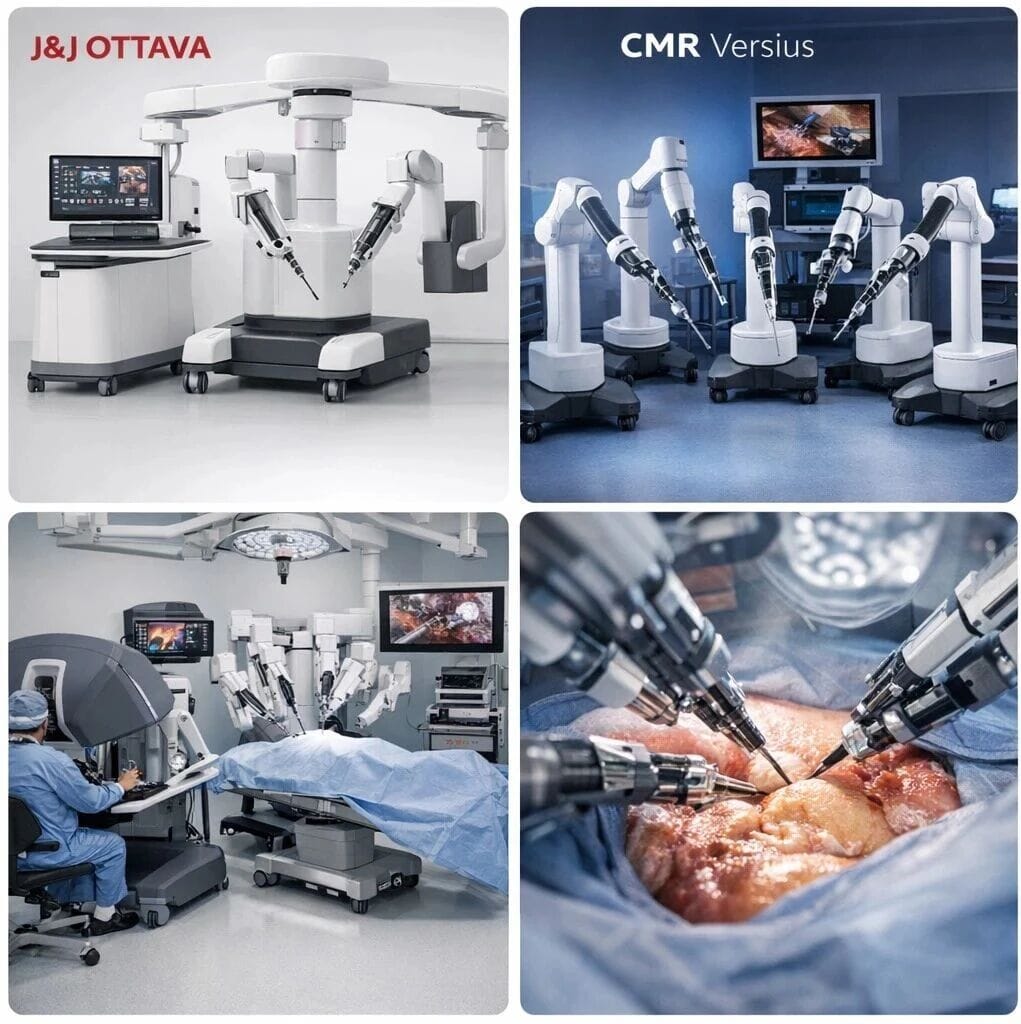
Over the past two years, surgical robotics has almost becomeone of the most talked-about yet hardest-to-assesssectors in the medical device industry.
At the very start of 2026, the debate over “regulatory pathways” in this field has clearly been brought to the forefront.
If you look at them separately, they seem like a few scattered international headlines; but taken together, they are actuallya very clear signal:
Surgical robotics is entering a stage where registration strategy and evidence-generation capability are what matter most.
1. Why say the “registration battle” is escalating?
At the beginning of the year, Johnson & Johnson publicly confirmed that it had submitted to the FDA its OTTAVA surgical robotic system’s De Novo submission, covering general surgery-related indications.
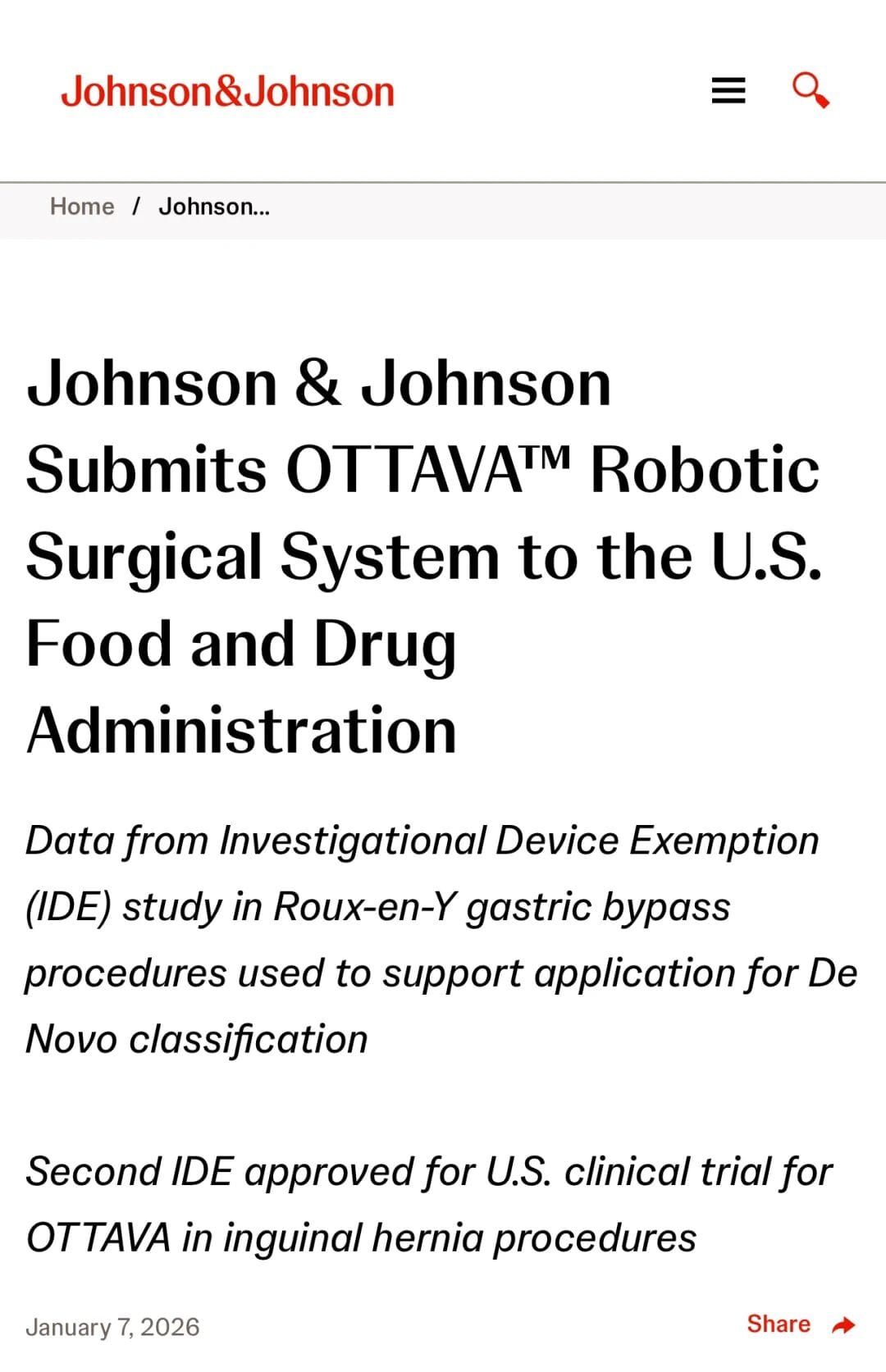
The significance of this move is not simply that “another giant is getting into robotics.”
In the FDA framework,De Novo often means two things:
The product’s technological approach or system complexity makes it difficult to rely on an existing “predicate”
At the same time, the regulator is also buildinga new regulatory framework for this type of product
In other words, this is a move to **set the rules first, then talk about scale**.
2. On the other hand: some are pursuing De Novo, while others have already reached the market via 510(k)
Almost at the same time, UK-based CMR Surgical announced that its new-generation surgical robotic platform had received FDA 510(k) clearance for specific surgical procedures.
This news is easier to overlook, but it is actually crucial—
It shows that:Surgical robotics does not have only one regulatory pathway.
Some choose to:
Use more comprehensive clinical and system-level evidence
pursue De Novo and secure broader room for technology and indications
Others choose to:
Focus on specific procedures
achieve commercialization first within an existing regulatory framework
Neither path is right or wrong, butthey require completely different capabilities from the company。
3. Why should domestic companies also pay attention to this?
Even if they are not pursuing FDA clearance for now, domestic companies can hardly afford to “turn a blind eye” to this shift.
The reason is very straightforward:
Surgical robotics is now widely regarded ascomplex-system medical devices
The review focus is shifting from “device functionality” tosystem safety, software control, and clinical use scenarios
The regulatory logic is increasingly aligned with real surgical risk rather than with stacking technical specifications
Simply put, it comes down to one sentence:
Registration is no longer about drafting paperwork; it is about clearly explaining why you can perform this procedure safely.
4. Where might things get “stuck” next?
Based on current regulatory trends, over the coming period the three issues most likely to be repeatedly questioned in surgical robotics projects are:
Indication boundaries:
Are you really developing a “general-purpose platform,” or are you clearly targeting specific procedures?
Clinical evidence rationale:
It is not just about the volume of data, but whether it can support the specific use scenario.
System-level risk control:
Software updates, failure modes, training, and the learning curve will all be scrutinized closely.
These issues,the later they are addressed, the higher the cost。
Closing thoughts
Looking back, it becomes clear that
competition in surgical robotics has gradually shifted from “whose robotic arm is more agile,”
to—
who understands regulation better, and who treats registration as a systems engineering effort earlier.
The escalation of this “registration battle”
may not be a bad thing for the industry as a whole.
At the very least, it is pulling this sector
back from concepts and stories toa competition of real capabilities。