
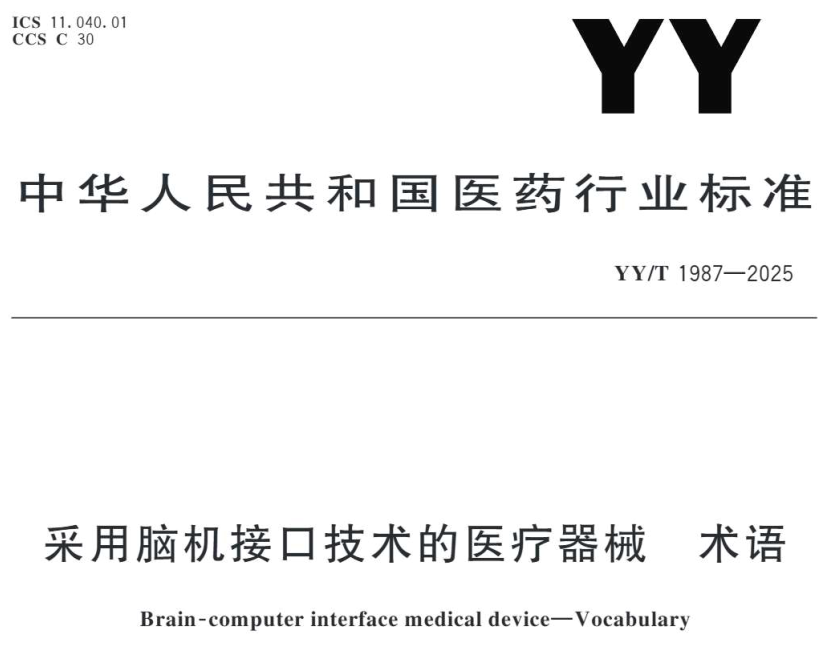
YY/T 1987-2025 is China’s first medical device standard for brain-computer interfaces, systematically defining 80+ core terms such as “invasive brain-computer interface medical device,” “neural decoding,” and “closed-loop feedback.”
In the standard release notice, the NMPA clearly stated that it will continue to track technological frontiers, accelerate development of related standards, and build a standards system covering the full product lifecycle, using high standards to drive high-quality industry development. As regulatory pathways become progressively clearer, companies are also accelerating clinical advancement:
In China, public reports indicate that some invasive brain-computer interface products have entered an expedited review “green channel,” and plans have been disclosed to initiate larger-scale, multicenter registration clinical trials; such publicly disclosed corporate clinical progress is becoming a major industry focus.
Overseas, the U.S. regulatory pathway still centers on clinical trial access (such as IDE) and staged validation. Multiple companies have publicly disclosed that they have obtained FDA clearance/approval to conduct human trials or have achieved key regulatory milestones, indicating that North America will continue to generate a dense flow of clinical data around 2026. For example, some companies have disclosed that their human trials began in 2024 and continue to expand, while others have publicly discussed 2026 manufacturing capacity and automated surgery plans.
In the EU, under the MDR framework, requirements for clinical evidence and systematic compliance continue to tighten. At the same time, EU regulatory texts also note practical constraints such as delays in the development of electronic systems for clinical investigations. As a result, market access for brain-computer interface products in Europe in 2026 is expected to depend even more on dual-track progress in “clinical evidence + compliance systems.”
Overall, 2026 appears to be a critical window in which brain-computer interface medical devices move from “technically feasible” to “approvable, usable, and scalable”: ongoing improvements in terminology and standards, faster clinical trial pacing, and increased corporate public disclosure will collectively heighten industry focus on clinical compliance, evidence quality, and regulatory pathway design.